- The Good: A chilling portrait of small-town American violence
- The Bad: Difficult subject matter; potentially overly compassionate toward the murderers
- The Literary: Highly researched; beautiful prose
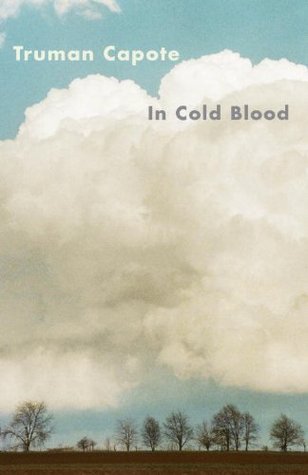
On November 15, 1959, in the small middle-American town of Holcomb, Kansas, a rural farmstead was invaded, and the four members of the Clutter family were brutally murdered. Very little was stolen from the home, and without an apparent motive or witness, the investigation did not gain traction for many months.
Truman Capote, already a successful novelist, read a short news article about the Holcombe murders in the New York Times. He traveled to Kansas, and over the next four years became acquainted with everyone associated with the case, and most of the town. His good friend and fellow novelist Harper Lee accompanied him, befriending the wives he wanted to interview and assisting with the research.
Capote was exploring a new writing style he called narrative journalism and is now considered as one of the founders of New Journalism. In Cold Blood crafts a novel out of real life events, expertly written, and the first of its kind.
The structure of the novel is chronologically linear, beginning with a reconstruction of the murder, the movements of the killers through the weeks and months afterwards, the investigation, the capture, the trial, and eventually, the execution. What I find interesting about this structure is that it’s clear from the beginning who the killers were and how the murder was done, which is, in fact, not how those living through it experienced the events.
The nonfiction novel isn’t written like a murder mystery. But Capote manages to generate an astonishing level of suspense. He reveals the stories of many characters (including the family, townspeople, investigators, and the killers themselves) through alternating perspectives. The depth of portrayal and the characterization, combined with the luminous prose, keep the pages turning.
Of course, being a fictionalized true crime, Capote writes conversations, and even internal dialogue, that are embellishments to the cold hard facts. That don’t bother me. I understand what novelized nonfiction means as a genre, and that a little literary license is allowed. Here’s where I think the book shines, adding depth and connection, especially to the murdered family.
The story opens with the murders, and they are gruesome. The story isn’t easy. The chapters are difficult to read because they generate emotions of horror and disgust at the possibility that some humans can commit such terrible acts with such ease. In fact, the entire book is difficult to read because of the subject matter.
Yet, there is empathy for these killers. Alongside chilling confessions of the killers are character studies of childhood abuse. Capote doesn’t excuse the murders, but he does make you think twice about the structure of our justice system and the moral weight of capital punishment.
Highly recommended for fans of true crime, mystery, and American classics.