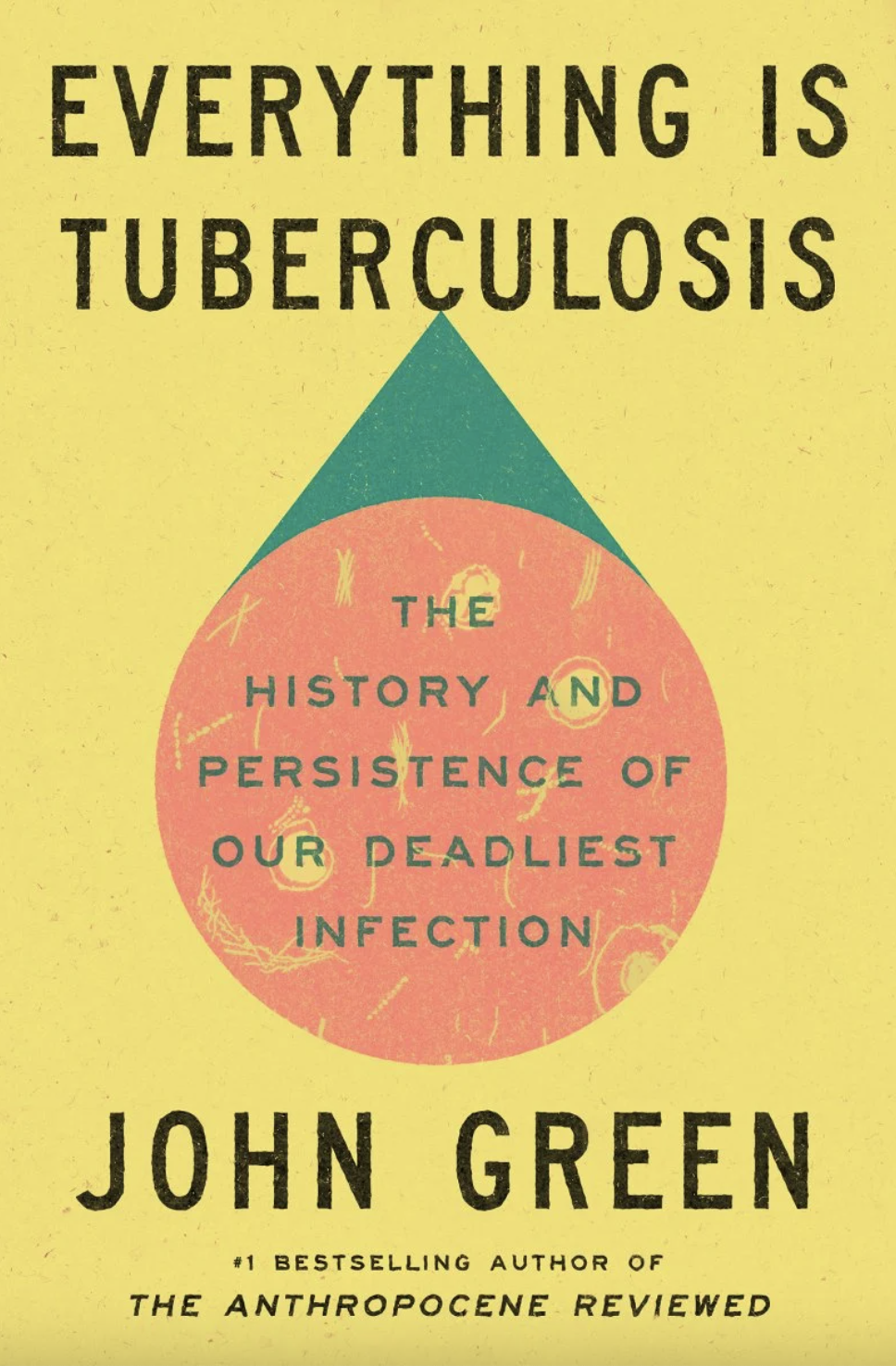
Tuberculosis is a curable disease brought on by the bacteria mycobacterium tuberculosis, and it has been the leading cause of death from infectious disease for centuries, if not millennia. Author John Green presents a good overview and introduction to the social history and science, but argues that the disease persists not from the bacteria, but because of human choices.
John Green cuts to quick of it and fast. In 2019, he met a young tuberculosis patient at the Lakka Government hospital in Sierra Leone, and they became good friends. Henry was a boy with a big toothy smile, who John initially thought was the son of a nurse or someone who worked there. But he soon discovered he was a patient, and twice as old as John originally thought due to stunting from the disease and malnutrition.
But before we get deep into the heart strings, it’s important to acknowledge that most of us know very little of this disease. I have a vague memory of being tested for TB along with a slew of other diseases while in school. But mostly I think of the 2001 film Moulin Rouge, in which Satine’s character hides her deep coughs from everyone, including her secret lover Christian. When Satine finally coughs up blood into a handkerchief, the audience knows she’s dying.
Surprising me, tuberculosis is disease from which many people still die, though we have a cure for it. Once romanticized as a malady of poets (which is a fascinating rabbit hole), today tuberculosis is seen as a disease of poverty. As Green puts it, the cure is where the disease is not, and the disease is where the cure is not. If you get tuberculosis in the United States, you have healthcare infrastructure and access to multiple lines of drugs. That is not true in many other countries worldwide, and this book highlights general healthcare inequities.
Paired with the history of humans’ relationship with tuberculosis, Henry’s story is personal and impactful, and brings the reader to a sense of shared humanity and why this story is important. Because this is a relatively short book and it’s an overview, it can feel scattered, but Green provides several recommendations for further reading at the end. I’ll be following up with Green’s call to action through his grassroots advocacy network TB Fighters.
Recommended as a short, engaging read for when you are ready to fight for social inequalities!