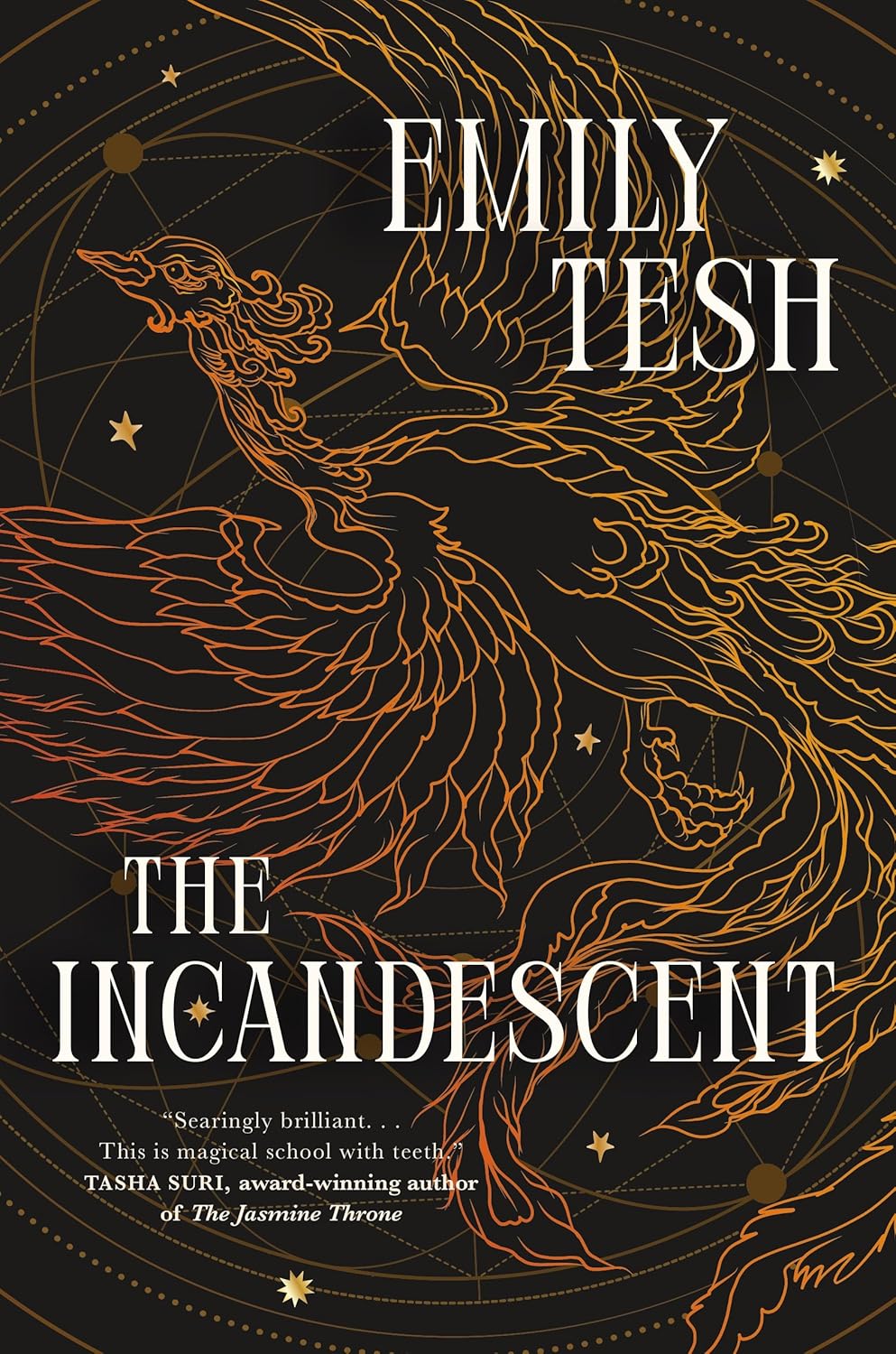
- The Good: A British magical academy with an elder millennial professor
- The Bad: Light on magic and worldbuilding and heavy on the mundanity of teaching
- The Literary: A criticism of academics with superiority complexes
Doctor Walden is a professor and the Director of Magic at Chetwood Academy, a prestigious private academy in England. She’s also a powerful magician, but her days are mostly filled with meetings, teaching invocation classes, and occasionally securing the school’s boundaries from demonic incursions. Walden hersel has only four senior students, as the magical department is fairly small, and the academy teaches all the normal subjects as well.
The Incandescent is an academic novel with some magic and a hint of sapphic romance, but instead of giving the perspective of a student, it’s from that of an almost 40-year-old teacher. I’d wager that this author and her readers are now the Harry Potter grown-ups. We’re still finding ways to be at a magical school. I had high hopes for this story, because Tesh won the Hugo Award two years ago for her first novel, Some Desperate Glory.
Unfortunately the school doesn’t feel all that magical. Walden’s days are pretty trivial, so be prepared for a story about the mundanity of teaching. There’s some joy in getting to know and almost predict the behavior of each of her students, while at the same time watching them grow. Walden’s side job is to keep her students safe from demons, who concentrate around universities, as they are attracted to both young and naive witches and wizards, but also to technology, like cell phones. Yes, there are cell phones, and vapes, and references to the COVID pandemic.
The harsh reality of teenagers could be an interesting juxtaposition against the magical world, but there’s so little explanation of what magic is used for that it feels like a fine arts degree. The author mentions a few examples throughout the book without any follow-up. Isaac Newton was one of England’s best magicians but it’s not clear what he did. There were also magicians working during WWI and the Blitz but for offense or defense or strategy—again, it’s not clear. A student asks Walden directly what she would actually do with a degree in magic besides teach or work in the government, and Walden doesn’t really have any answers. She does however, invite a former fellow graduate student, a loud and brash Californian magical consultant and public speaker, so her students can see some alternate possibility for their futures in magic. But the interaction is more about how Walden sees first-hand how wealthy and successful she could be outside of academia. Afterwards, Walden convinces herself she is where she wants to be, but you don’t really believe it.
I wanted to believe that this book is about how institutions and the systems we’ve set up fail both our teachers and our students, especially students without the support of rich parents. One of her students is the best Walden has ever had, but the student considers not applying to college because she doesn’t want to be the poor black student who feels totally out of place. Which would be a great sub-plot, had it been explored any more than that.
I like the idea that the protagonist’s hubris is the impetus for the final conflict, which seems consistent with the inflated egos of those high in academia. But I chafe that the love interest is essentially a magical police officer, the savior, and that her system and presence on a campus is generally considered to be a positive, because I wanted this to be a book about how good people work in flawed systems, but I think I’m reading too much in for this light easy contemporary fantasy.
Recommended for niche fantasy fans for love the low-stakes cozy fantasy.